
Fire Prevention Measures
Published: · 10 min read
A fire disaster can have any number of causes, but the leading one is a lack of precautions. Misuse of LPG cylinders and heating systems is the leading cause of fires in workplaces and homes. Beyond that, buildings’ heating pipes need regular cleaning, and precautions need to be taken around explosive materials. Fire precautions should never be treated carelessly — take the right measures and a fire disaster can be avoided. Fire prevention has to work at more than just the individual level; it needs to be applied at the community and institutional level too. Regularly inspecting fire suppression equipment, drawing up fire-safety plans and running regular training are all vital.
Fire precautions should never be neglected and always applied with care. Basic steps such as using household electrical appliances correctly, and installing and maintaining heating systems properly, can lower the fire risk. But a lack of awareness and simple carelessness can start fires just as easily. Leaving appliances plugged in when you leave the house, leaving the stove on, or carelessly discarded matches and cigarette ends, all pose a serious hazard. Beyond that, unwanted events such as natural disasters and arson can also raise the fire risk — wildfires sparked by lightning strikes, or fires started deliberately, can cause serious loss of life and property.
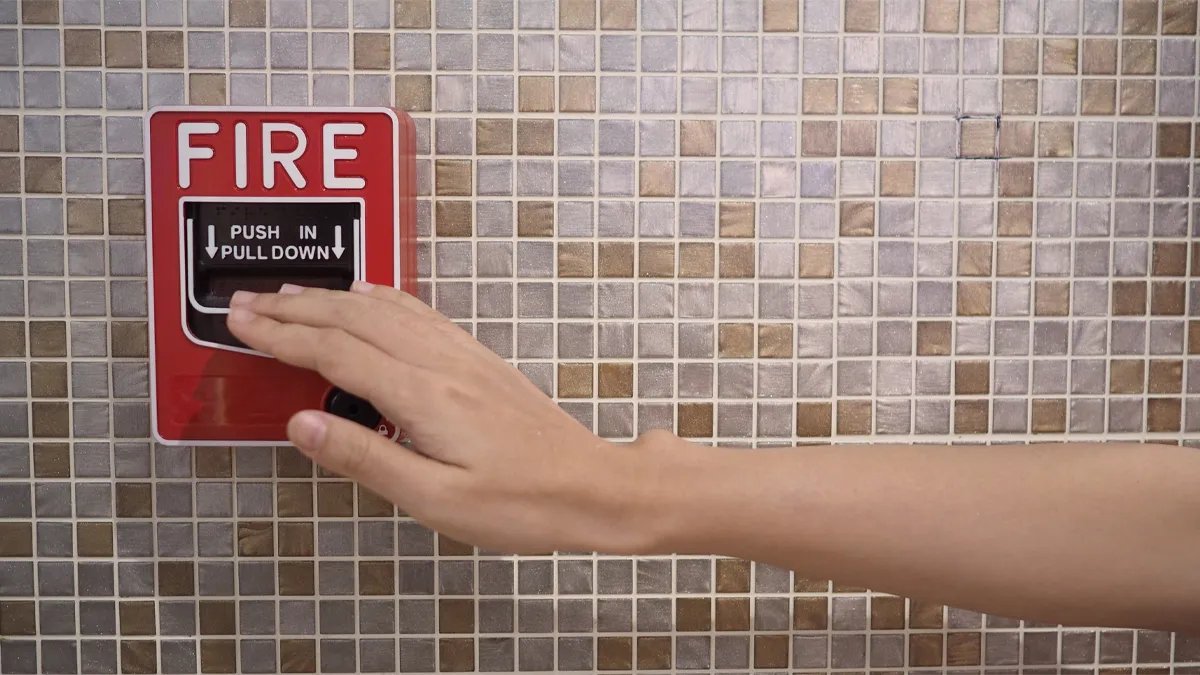
As for what to do during a fire itself, the essentials are as follows. Stay calm above all else. Call the fire brigade to report the fire, and press the fire alarm call point if there is one where you are. If it is possible to get away from the area before the fire brigade arrives, do so. If getting away is not possible, open doors and windows to ventilate the space, cover your mouth and nose with a wet cloth or napkin while breathing, and take care not to inhale toxic gases. No one but responders should be allowed into the area, and no one else’s safety should ever be put at risk.
Fire Extinguisher Maintenance and Placement
Fire cylinders and extinguishers play an important role in fire safety, and they need regular servicing and inspection to keep working effectively. First, fire extinguishers should be checked by an authorised service provider at the intervals the manufacturer specifies — typically once a year. Under the applicable regulations, fire extinguishers also need to be inspected every six months and serviced every six months. On top of that, they need a monthly visual inspection, checking for physical damage and confirming that the pressure gauge reads within the normal range.
The pressure inside a fire extinguisher should be checked periodically, and the service provider should recharge it if the pressure is low. Storing and using it in line with the instructions matters too. As part of extinguisher maintenance, every component is checked for function and worn parts are replaced where needed. The technician also checks the extinguisher’s overall condition — that its labelling is complete and legible, and that it is clean and its paintwork sound.
The trigger mechanism, hose, seals and extinguishing agent are also checked. Extinguishers are inspected for cracks, deformation and signs of corrosion, and where an extinguisher is rechargeable, its propellant gas is tested. In Türkiye, the basis for comprehensive fire extinguisher maintenance is set out in the TSE HYB 11827 service-provider competence standard.
The rule of thumb is one suitably rated 6 kg dry chemical powder extinguisher, or an equivalent gas-type unit, per 500 m² of floor area in low-hazard occupancies, and per 250 m² in medium- and high-hazard occupancies. Regardless of the building’s total floor area, a multi-storey building should be assessed floor by floor against its hazard class, and every floor — even a small one — needs at least one extinguisher. Car parks, storage areas, plant rooms and similar spaces additionally require a wheeled extinguisher. Extinguishers should be distributed evenly, positioned near escape routes, clearly signed and visible, and placed somewhere easily accessible at all times — inside or near a fire hose cabinet. No one should have to travel more than 25 m to reach an extinguisher.
For portable extinguishers, the wall-mounting bracket should let the unit come off the wall easily, and units weighing more than 4 kg and less than 12 kg should be mounted no higher than roughly 90 cm above the floor. Their location should be marked with photoluminescent signage that is clearly visible from a distance, and emergency-equipment signage should sit 2 metres above the floor. Fire extinguishers, in short, should be positioned so that everyone can reach them as quickly and easily as possible.
Finally, training relevant staff or family members in how to use a fire extinguisher, and refreshing that training periodically, is essential to an effective fire-safety strategy. These steps make sure extinguishers can be used confidently and safely when needed, enabling a fast, effective response if a fire does break out. Keep this maintenance on schedule and extinguishers work far more effectively, doing a better job of stopping a fire in its tracks.
Fire Prevention Measures by Area
In smoking areas, the precautions taken to cut the fire risk really matter. The 730–800°C temperature of the ember at the tip of a cigarette is a significant factor pushing up that risk. Smoking should be strictly prohibited in production, storage, transport and supply areas, and designated smoking areas should be set up where it can be kept under control. Fire cylinders or extinguishers should be provided wherever smoking is permitted, and they should be maintained regularly.
That kind of equipment enables a fast response and can stop a fire growing. Second, smoking areas should be designated spaces designed with safety in mind, kept separate for smokers. Within them, it matters that smokers stay alert and keep cigarettes away from combustible materials. Third, smoking areas should be cleaned regularly, with cigarette ends properly extinguished and disposed of.
Improperly extinguished cigarette ends, and smoking in an area with readily combustible materials nearby, should both be prevented. Care should be taken to avoid a build-up of combustible waste or any other situation that could lead to a fire. Finally, smokers in these areas should be trained: made aware that cigarette ends need to be properly extinguished and disposed of, with fire safety and the environment both kept in mind. Taken together, these steps minimise the fire risk in smoking areas and play an important part in keeping both smokers and everyone around them safe.
Electrical safety is critical to fire prevention. The fire risk can rise depending on the type of electrical circuit, how the electricity is used, and the nature of the electrically powered equipment involved. First, regular maintenance and inspection is one of the basic steps in keeping an electrical installation safe. Cables, sockets and other equipment should be inspected by qualified professionals at regular intervals and serviced where needed — that catches potential faults early, before they can be corrected, cutting the fire risk.
Most electrical fires start with faulty sockets, or old sockets that were never properly earthed. Ageing sockets and the wiring behind them wear over time — the wires work loose and eventually break, and that can start a fire. Other fires trace back to faults in appliance cords, sockets and switches. Overload a socket and it can spark, potentially starting an electrical fire.
An appliance with a worn or frayed power cord should never be used near combustible surfaces such as flooring, curtains or rugs, since it can transfer heat to them and start a fire. Running cable under carpets is another common cause of electrical fires and should be avoided. Electrical leakage and cable faults should be checked frequently. Fuses and residual current devices (RCDs) are also critical to electrical safety — they cut the circuit fast whenever something abnormal happens, reducing the fire risk.
Regularly checking these protective devices, and confirming they work as intended, matters especially in homes and workplaces. Electrical power should be installed and used in line with a sound design, and any changes or additions made to an industrial facility later on need to keep matching that design.
Every electrical device, motor, ventilation unit, light fitting and similar item at any point in production where it is called for must be Ex-proof (explosion-safe/flameproof). Finally, electrical devices and sockets need to be used correctly and cleaned regularly — dirty or dusty sockets and equipment can overheat and create a fire risk. Cleaning and maintenance should happen on a regular schedule, and users should be made aware of why it matters.
Fire Evacuation Planning
An emergency plan is the general term for setting out the precautions a workplace owner must take against fire, natural disaster or events such as a pressurised vessel rupturing, then planning those precautions and running the drills that go with them. An emergency and fire evacuation plan deserves serious attention: done well, it can even blunt the impact of a major fire, keeping people from losing their lives or property to it.
-
First, a green evacuation (escape) route is marked leading to the emergency exit door on that floor. Where there is no emergency exit door, the same is done for the ordinary stairs.
-
The direction of escape should be marked with green arrows.
-
The locations of any fire extinguisher, fire hose, or fire hose cabinet holding both should be marked on the plan using the correct symbols from the symbol key.
-
The locations of fire alarm call points should be marked.
-
The location of the electrical panel should be marked.
-
The location of the first-aid cabinet should be marked.
-
Once the evacuation plan is finished and mounted on the wall, that location should be marked on the plan with a “YOU ARE HERE” symbol.
Smoke Detectors
Smoke detectors are one of the most widely favoured fire-prevention tools of recent years. As the technology has matured, they have become an increasingly popular choice, and with careful planning they perform extremely well. Smoke detectors come in a range of sizes and types, for homes, hotels, business centres, hospitals, schools and countless other spaces.
The biggest reason smoke detectors have become so widely recognised is the ban on smoking in enclosed spaces. Originally deployed as a deterrent for smokers, these systems, now built on the latest technology, have become one of the leading fire-prevention devices around. Because smoke is one of the most basic indicators of a fire, smoke detectors make early evacuation and a fast response possible.
When the level of smoke in an area rises past a stable baseline, the smoke detector raises the alarm, prompting a response. It is one of the more advanced, highly sensitive safety systems available, which is why it is such a widely favoured fire-prevention device, used across so many kinds of building. Getting the mounting location right matters — it is not recommended in steamy spaces such as bathrooms.
Teza Engineering delivers safety solutions tailored to your needs, identifying and implementing the right measures for any type of facility. Our custom-designed solutions use the latest technology to maximise safety and minimise risk. For more information, get in touch with us, follow us on LinkedIn, and visit our website!
Related Posts
September 26, 2024 · 5 min read
What Is a Water-Based Fire Suppression System?September 26, 2024 · 5 min read
What Is Gaseous Fire Suppression?September 21, 2024 · 4 min read
What Is CO2 Fire Suppression?