
Kitchen Hood Fire Suppression Systems
What Is Kitchen Hood Suppression?
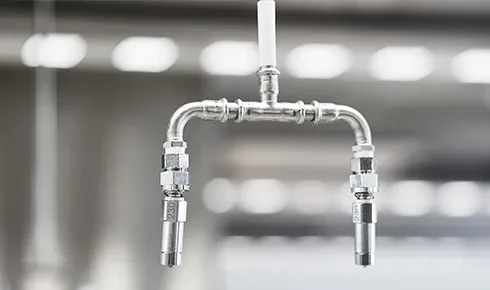
Kitchen hood fire suppression systems are reliable solutions designed to effectively bring under control fires that may occur in kitchen hoods. These systems activate when the detection line senses a fire, and a potassium carbonate-based liquid extinguishing agent, specially developed for hot-oil fires, is rapidly discharged from the discharge line. The extinguishing liquid is distributed over the fire through nozzles and brings it under control quickly. The liquid forms a foam-like layer over oil fires that cuts off the flames’ contact with oxygen, preventing the fire from spreading. This system is an important fire-safety measure, particularly in kitchen environments.
Certificates & Approvals of the Kitchen Hood Fire Suppression Systems We Offer


The kitchen hood suppression system is a pre-engineered local application system that detects and automatically extinguishes fires in the many cooking appliances used in commercial kitchens. It is listed by Underwriters Laboratories, Inc. in accordance with UL-300 requirements.
- Restaurant hoods, plenums, filters, ducts and associated cooking appliances
- Deep-fat fryers
- Grills
- Ranges
- Upright broilers
- Charbroilers
- Gas-fired radiant charbroilers
- Griddles
The kitchen hood suppression system uses a potassium-based liquid fire-extinguishing agent specially designed for grease-laden fires such as those in restaurant cooking areas. It works to extinguish commercial kitchen fires in three ways.
Breaking the Chemical Chain Reaction
It interrupts the chemical chain reaction that causes combustion, extinguishing the fire.
Cooling Through Misting
It is discharged as a very fine mist that cools the fire below its auto-ignition temperature.
Saponification
It reacts with the grease to form a foam-like layer known as saponification, which starves the fire of oxygen, stops combustion and prevents re-ignition.
The system activates automatically when a fire is detected, or it can be operated manually using a remote manual pull station located at the exit point(s) from the hazard area. When activated, the system discharges a pre-determined quantity of extinguishing agent into the duct, plenum and cooking appliances through the piping network and fixed nozzles. The agent is discharged as a very fine mist that rapidly suppresses grease-laden fires.
Kitchen Hood Fire Suppression System Types
For kitchen hood fire suppression systems, the system selection is generally made according to the type of cooking oil used in the kitchen and the fire risk. Contact us today for technical and detailed information about your kitchen hood fire suppression system.
Chemical Liquid Based
POTASSIUM CARBONATE BASED LIQUID
Potassium carbonate-based chemical liquids designed specifically to respond to hot-oil fires are used. In a fire, the chemical liquid is discharged through nozzles to quickly extinguish the oil fire.
CO2 (Carbon Dioxide)
CARBON DIOXIDE GAS
Carbon dioxide gas extinguishes fire by cutting off the combustible material’s contact with oxygen. It is generally used outside of oil fires, since chemical liquids can be more effective than gas for oil fires.
Water Mist
WATER MIST TECHNOLOGY
Water mist technology extinguishes fire by turning water into a fine mist. This method is preferred especially in sensitive and small kitchens. Because it suppresses fire using a small amount of water, it minimises water damage.
Related Solutions
Let's Identify the Risks in Your Process
Let's determine together what precautions should be taken regarding explosion and fire safety in your facility.
