
What Is a Sprinkler Fire Suppression System?
Published: · 10 min read
Sprinkler fire suppression is vital in both commercial and residential buildings. Given that fires are serious events that can cause both property damage and loss of life, putting an effective fire safety system in place is unavoidable. In this context, the sprinkler fire suppression system stands out as one of the cornerstones of modern fire safety strategy. So what is a sprinkler fire suppression system, how does it work, what are its advantages, and how do you choose the right system? In this article, the Teza Mühendislik team takes a close look at every side of sprinkler systems.
Definition of a Sprinkler Fire Suppression System
A sprinkler fire suppression system is a fire safety system that activates automatically in the event of a fire and discharges water over a defined area. It is typically used in large buildings, shopping centres, industrial facilities, hotels, hospitals and other high-risk structures. Sprinkler systems bring fire spread under control, minimising loss of life and property and reducing potential damage.
How Do Sprinkler Fire Suppression Systems Work?
The operating principle of sprinkler systems relies on a simple but effective mechanism designed to respond quickly and effectively the moment a fire starts. These systems are critical to bringing fire spread under control and minimising loss of life and property. Let’s look at the working principles of sprinkler systems in more detail:
1. Fire Detection
The first stage of a sprinkler system is detecting the fire. This stage determines when the system needs to activate. Fire detection generally involves the following steps:
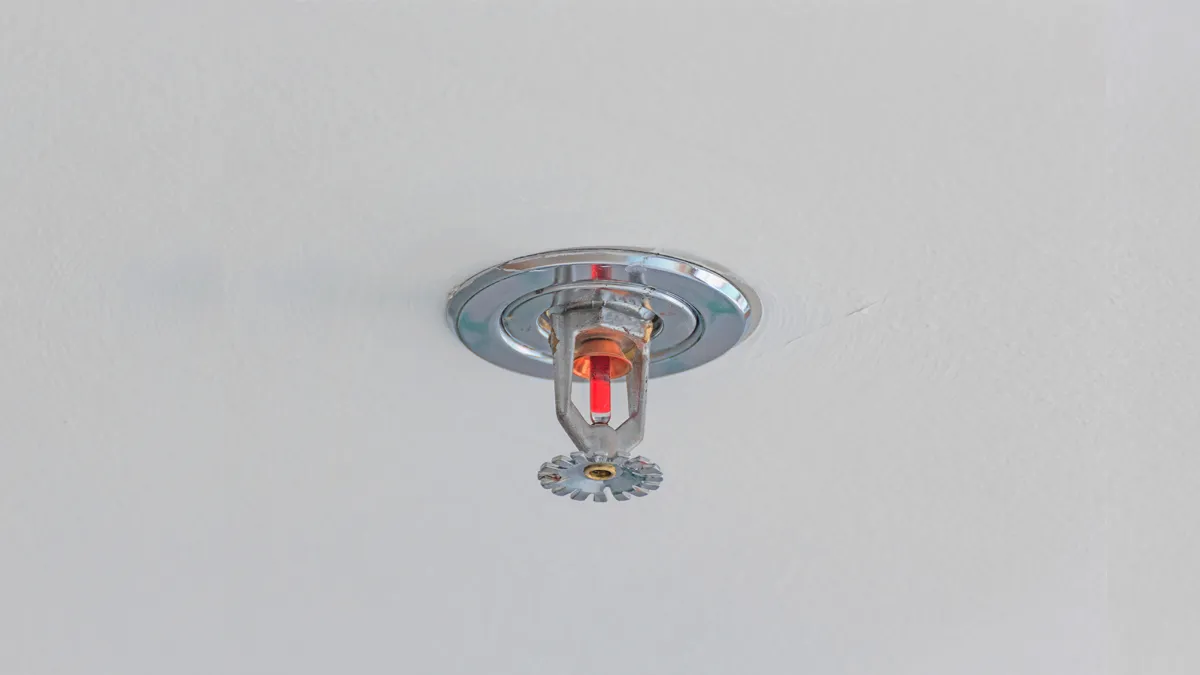
- Temperature Sensors: Sprinkler heads typically detect fire through the temperature sensors they contain. These sensors activate once a given temperature threshold is reached. Each sprinkler head contains a glass bulb or fusible alloy that responds at a specific temperature. These materials break or melt once they reach that temperature.
- Smoke Sensors: Some sprinkler systems are integrated with smoke detectors. Smoke sensors detect smoke particles in the air and trigger the system. However, smoke detection alone may not be sufficient, so it is usually combined with temperature sensors.
- Dual Detection Systems: More advanced systems combine temperature and smoke detection to provide dual detection. This helps prevent false alarms and ensures the fire is detected accurately.
2. Opening of the Sprinkler Heads
Once a fire is detected, the sprinkler heads open automatically. This stage marks the point at which the system begins responding to the fire:
- Temperature-Triggered Opening: The glass bulb or fusible alloy in each sprinkler head opens once it reaches a specific temperature. Glass bulbs typically break at temperatures ranging from 57°C (135°F) to 93°C (200°F). Fusible alloys melt once they reach that temperature, releasing the water.
- Head Layout: Sprinkler heads are installed in a defined pattern. This layout ensures water is discharged to cover the entire area. The heads are typically arranged to form a grid, so the water is distributed evenly.
3. Water Discharge
Once the sprinkler heads open, water is discharged onto the fire area immediately. This stage aims to bring the fire under control and prevent it from spreading:
- Water Flow: Water passes through the sprinkler heads and is distributed over a wide area. The heads discharge water at a specific angle, spreading it over a larger surface. This slows the fire’s growth and brings it under control.
- Water Volume and Pressure: Sprinkler systems supply the amount of water required based on the size of the fire. The water pressure in the system also plays an important role in extinguishing the fire effectively. Pressurised water is discharged intensely onto the fire, providing effective cooling.
- Continuous Water Flow: Once the sprinkler heads open, water flows continuously. This is necessary for the fire to be fully extinguished. Water flow continues until the fire is brought under control.
4. Alarm and Notification
Many sprinkler systems are integrated with an alarm system when a fire is detected. This informs building occupants and safety teams during the fire:
- Alarm Systems: Most sprinkler systems are integrated with an alarm system. The alarm is usually triggered as an audible warning or a visual signal. This alerts building occupants to the fire and initiates the evacuation process.
- Automatic Notifications: More advanced systems can automatically notify authorities once a fire is detected. This allows emergency teams to reach the site quickly and shortens response time.
- Central Control Panels: Alarm systems can be integrated with central control panels. These panels monitor the fire condition and, when needed, send data to emergency management systems. The status and performance of the system can also be tracked through the panels.
Advantages of Sprinkler Fire Suppression Systems
The effective operation of sprinkler systems offers a number of advantages:
- Early Response: Sprinkler systems activate automatically the moment a fire starts and quickly discharge water to prevent it from spreading. This early response prevents the fire from growing and causing large-scale damage.
- Life and Property Safety: They minimise loss of life and property during a fire. Sprinkler systems keep the fire under control and increase the safety of building occupants.
- Economic Protection: Bringing the fire under control helps prevent significant economic losses. In addition, sprinkler system maintenance costs are generally lower compared with other safety systems.
- Investment Protection: They help protect major investments and property. They provide a critical safety element for industrial facilities, shopping centres and other large structures.
Limitations of Sprinkler Systems
Although they provide an effective fire safety solution, sprinkler fire suppression systems also have some limitations:
- False Alarms: Due to the sensitivity of the systems, false alarms can occur. This can lead to unnecessary water discharge and potential damage. Correct installation and maintenance of the system are needed to prevent false alarms.
- Water Damage: The water used during fire suppression can sometimes cause water damage to buildings. This can be a problem, particularly in areas containing valuable items.
- Maintenance and Testing Requirements: Regular maintenance and testing are required for sprinkler systems to operate effectively. Periodic checks are needed to make sure the systems are working correctly.
Types of Sprinkler Fire Suppression Systems
Sprinkler fire suppression comes in different variations depending on the needs and fire risks of different buildings. Here are the most common types of sprinkler system:
-
Dry Pipe Systems:
- Definition: The pipes are not filled with water; instead, they are filled with air until a fire occurs.
- Advantages: Used in areas with no freeze risk, offering an effective solution in cold climates.
- Applications: Used in regions and buildings where cold weather conditions are common.
-
Wet Pipe Systems:
- Definition: The pipes are constantly filled with water.
- Advantages: Water is discharged immediately in the event of a fire, allowing a fast response.
- Applications: Preferred in warm climates, in areas with no freeze risk.
-
Hybrid Systems:
- Definition: Combine dry and wet systems.
- Advantages: Adapt to both cold and warm climate conditions.
- Applications: Used in regions with varied climate conditions and in different building types.
-
Micro-Spray Systems:
- Definition: Water is discharged as fine droplets.
- Advantages: Provide more effective cooling over the fire, and are particularly suitable for sensitive electronic equipment.
- Applications: Preferred in areas containing electronic equipment and other sensitive zones.
-
Pre-Action Systems:
- Definition: Provide two-stage protection. First, a detection system identifies the fire, then the water valve opens. In the second stage, water is discharged once the sprinkler heads open.
- Advantages: Prevent false alarms and provide safer suppression.
- Applications: Used particularly in data centres, museums and other locations containing high-value materials.
Selecting and Installing a Sprinkler System
Selecting and installing a sprinkler fire suppression system is critical to providing effective fire safety.
- Building Use: The intended use of the building or facility determines the type of sprinkler system. Commercial areas, industrial facilities and residential buildings may require different sprinkler systems. The appropriate system should be selected according to the level of protection each area needs.
- Building Size and Structure: The size and structural features of the building affect the system design. Large and complex structures may need a custom design. The layout of areas within the building and their intended use also affect system design.
- Risk Factors: More advanced sprinkler systems may be required in areas with a high fire risk. Simpler systems may be sufficient in low-risk areas. A risk analysis should be carried out, and the system chosen accordingly.
- Professional Installation: Sprinkler systems need to be installed by a professional team. Correct placement and testing of the system must be ensured during installation. This increases the system’s effectiveness and safety.
- Legal Regulations: Every region and country has specific regulations and standards for fire safety. These regulations must be followed when selecting and installing a sprinkler system. Local codes and standards should be taken into account.
- System Testing and Maintenance: Regular maintenance and testing must be carried out after installation. Periodic tests and maintenance are required to keep sprinkler systems effective. This ensures the system is always ready.
The Future of Sprinkler Systems and Technological Developments
As technology advances, sprinkler fire suppression continues to develop. In the future, we are likely to see smarter, more integrated systems:
- Smart Sprinkler Systems: IoT (Internet of Things) technology allows sprinkler systems to become smarter. These systems can be monitored and controlled remotely. They can also collect real-time data through sensors.
- Energy Efficiency: Systems that use less water and are more energy-efficient are being developed. These systems allow water to be used more effectively and save energy.
- Data Analytics: Advanced data analytics and the use of artificial intelligence can improve the performance and efficiency of sprinkler systems. These technologies can be used to monitor and analyse how the systems operate.
- Integrated Safety Systems: Sprinkler systems can be integrated with other safety systems. Working together with fire detection, alarm systems and emergency management provides more comprehensive safety.
Conclusion
Sprinkler fire suppression plays an important role in modern fire safety strategy. With its ability to respond to fire both automatically and effectively, it is a critical tool for protecting life and property. With its different types and applications, it offers solutions suited to every need.
Selecting, installing and maintaining sprinkler fire suppression professionally increases the effectiveness and safety of the systems. Correct selection and application of sprinkler systems is of great importance for achieving the best results in fire safety. In the future, these systems will continue to develop into smarter, more energy-efficient and more integrated solutions.
Teza Mühendislik offers solutions tailored to your safety needs, determining and implementing the most suitable safety measures for every type of facility. Our custom-designed solutions use the latest technology to maximise safety and minimise potential risks. For more information, contact us, visit our LinkedIn page and our website!
Related Posts
September 26, 2024 · 5 min read
What Is a Water-Based Fire Suppression System?September 26, 2024 · 5 min read
What Is Gaseous Fire Suppression?September 21, 2024 · 4 min read
What Is CO2 Fire Suppression?